Choosing an Event Wristband: Duration, Water Exposure and Security
A wristband is an access control device that tends to get bought as a print product, and that mismatch is where most orders go wrong. The specification gets settled on colour and unit price, and the operational questions only surface at the gate: whether a band can be slipped off intact and passed back to someone outside, whether it survives three days of a pool deck or a desert festival, whether staff can tell a day-one band from a day-two band at a glance, and whether an individual holder can be identified if something goes wrong. A band that fails any of those is not a cheaper wristband. It is a security gap with a logo on it.
Four questions settle the specification before artwork is even discussed: how many days the band has to last, how much water and abrasion it will meet, whether entry has to be non-transferable, and whether individual holders need to be identifiable. Deluxe Printing quotes against those four answers rather than against a material picked up front, which is why the range runs across Tyvek, fabric, silicone and vinyl instead of selling one band for every use.
Matching the Wristband Material to the Event
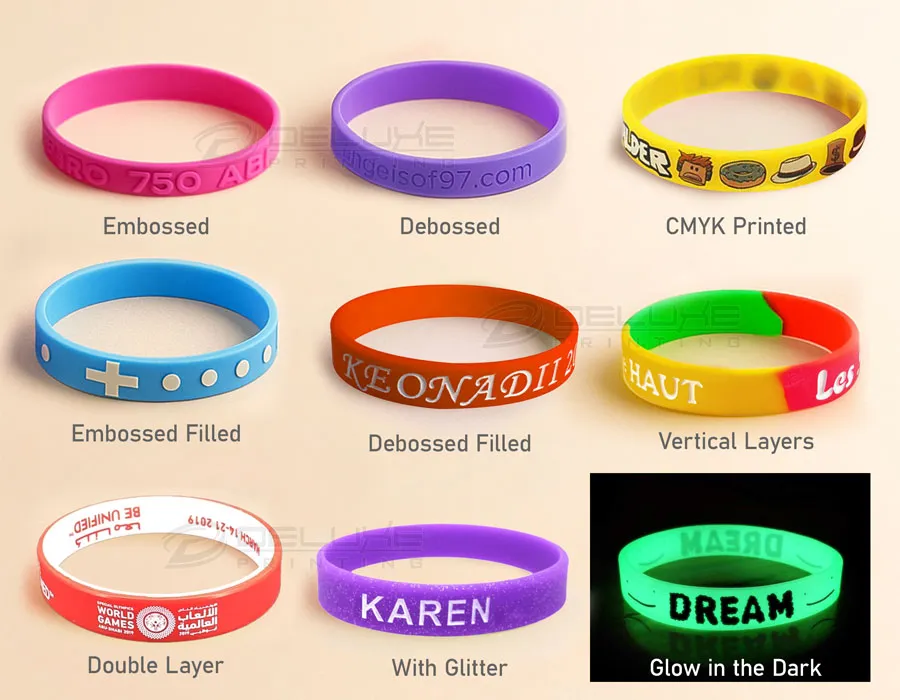
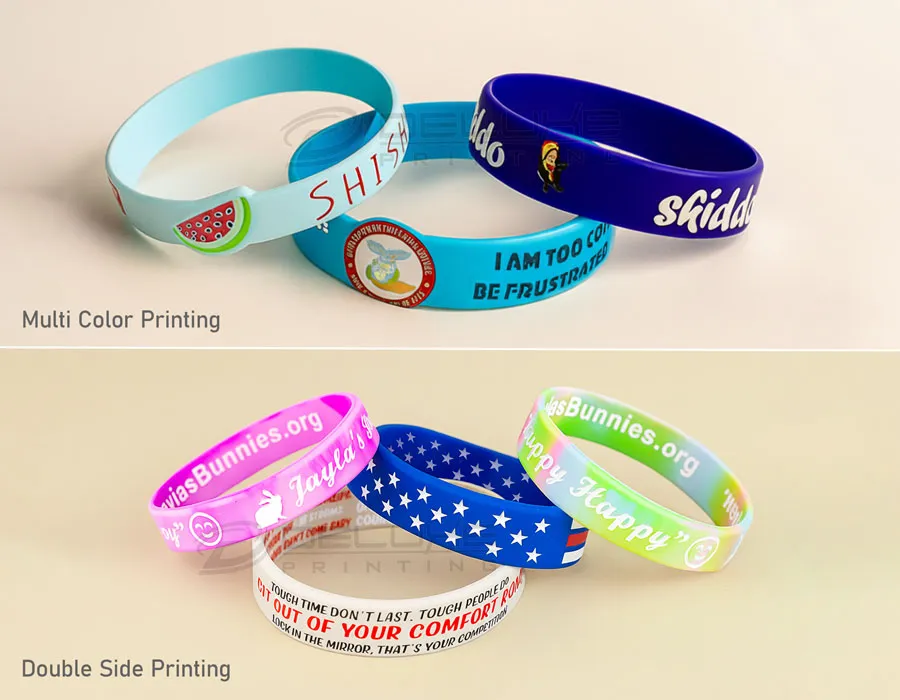
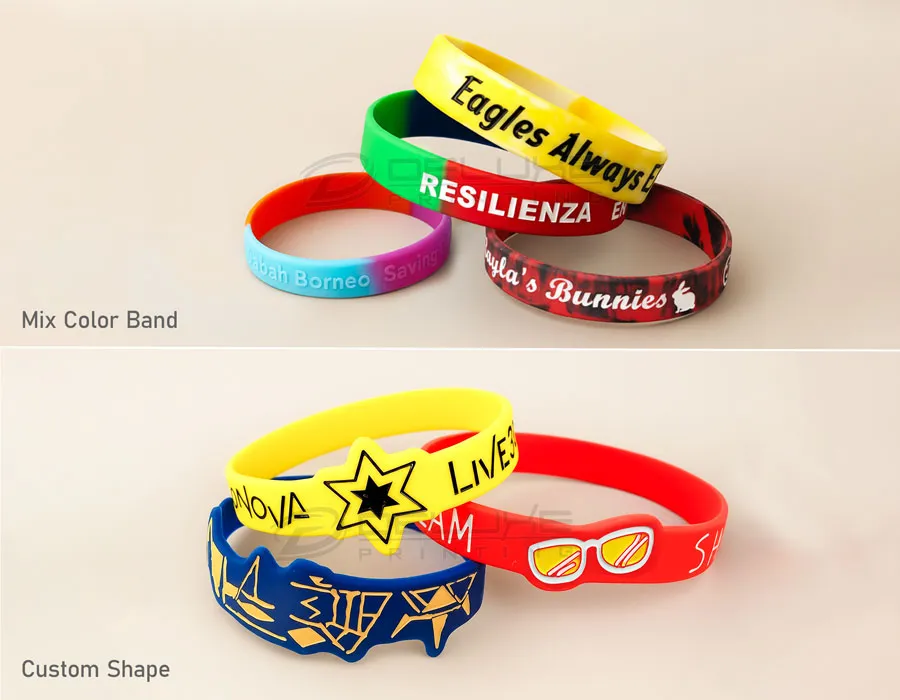
Event length is the first filter and it eliminates most of the range immediately. Tyvek is a single-day band: light, fast to issue and priced for volume, but not intended to stay on past the event. Fabric and vinyl are the multi-day options, both waterproof and both fitted with a closure that cannot be reopened, so they hold for the length of a festival or a resort stay. Silicone sits outside this logic entirely, because it is worn voluntarily and removed freely, which makes it useful for campaigns and useless for controlling entry. Water exposure then decides between fabric and vinyl.
Which Wristband Suits Which Event
| Wristband |
Event length |
Water exposure |
Transferability |
| Tyvek — ready colours |
Single day |
Waterproof |
Tamper resistant, single use |
| Tyvek — custom printed |
Single day |
Waterproof |
Tamper resistant, single use |
| Fabric |
Multi-day |
Waterproof, stretch-resistant |
Flat barrel lock, cannot be reopened |
| Vinyl |
Multi-day |
Waterproof by construction |
One-time snap, breaks if tampered with |
| Silicone |
Reusable, ongoing |
Waterproof |
Removable and reusable — not access control |
The last column is the one most buyers skip and most regret. A band with no number is a coloured strip: it cannot be reconciled against tickets sold, a missing sheet cannot be voided, and a disputed entry cannot be traced to a batch or a gate. Numbering costs very little at the point of order and is impossible to add afterwards. The transferability column matters just as much at outdoor venues, where the practical test is not whether a band looks secure but whether it can be removed in one piece and handed back over a fence.
Numbering, QR Codes and Variable Data
Sequential numbering is what makes a wristband auditable rather than decorative. Numbers let organisers reconcile bands issued against tickets sold, identify which batch entered circulation at which gate, and void a range if a sheet goes missing. Custom serial numbering runs your own sequence instead of a generic one, which matters across multi-gate or multi-day events. Beyond numbering, wristbands can carry QR codes, barcodes and individual names, which is where access control meets data capture: a scanned band can register attendance, control re-entry, or gate access to a specific zone. Tyvek and vinyl hold the print contrast that scanners need.
Where Event Wristbands Are Used Across the UAE
Event organisers take the largest volumes, using Tyvek for single-day admission at exhibitions and conferences at DWTC and ADNEC, and fabric for multi-day festivals where the band stays on throughout. Hotels and resorts specify vinyl for pool and beach club access, where the one-time snap and waterproof construction matter more than print quality, and waterparks and aquatic centres do the same. Gyms, fitness centres and sports clubs use vinyl and fabric for member and day-pass identification. Schools and universities use Tyvek for open days and sports days. Charities and marketing teams use silicone for awareness campaigns.
Production, Delivery and UAE Coverage
Printing and numbering are completed in-house at our Al Qusais facility, which matters on event work because a numbering range or a colour can be corrected without re-quoting through a supplier. Artwork guidelines are published per format so files arrive at the right dimensions and the printable area is used properly rather than discovered at proofing. Delivery covers Dubai, Abu Dhabi, Sharjah, Ajman, Ras Al Khaimah, Fujairah and Umm Al Quwain, with venue drop-off available for exhibitions and festivals including delivery directly to DWTC and ADNEC.