Why Sustainable Printing Works is the New Standard for UAE Corporate Branding
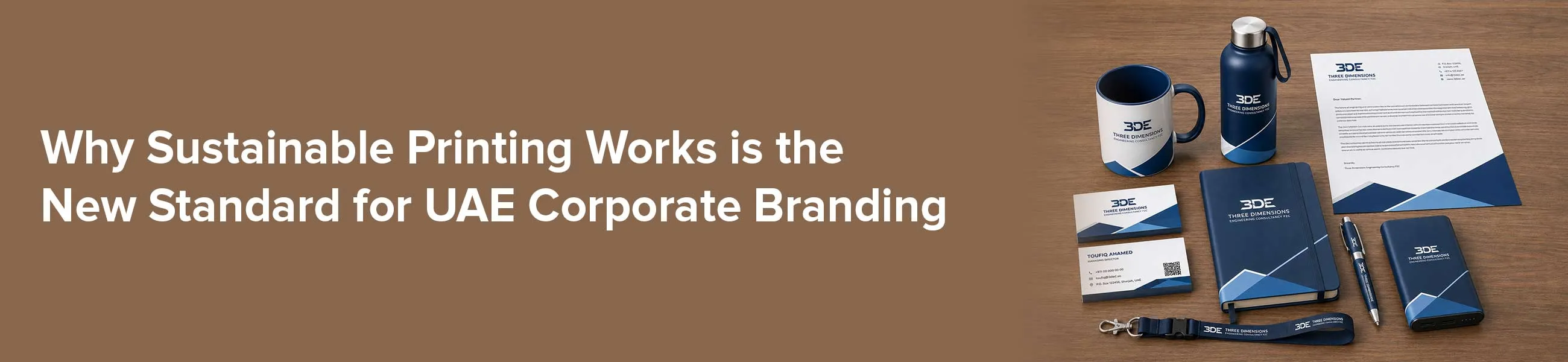
Sustainable printing works are becoming the new standard for UAE corporate branding because the country's national sustainability agenda - UAE Net Zero 2050, the UAE Green Agenda, and the ESG commitments of major UAE corporations - is filtering through to the procurement decisions of marketing and brand teams. Businesses in Dubai and Abu Dhabi that use recycled paper, soy-based inks, FSC-certified substrates, and carbon-conscious print suppliers are not simply making an environmental choice - they are aligning their physical brand materials with the values their corporate communications claim to hold. A brand that publishes a sustainability report on virgin-fibre laminated glossy paper is communicating a contradiction. A brand that publishes the same report on FSC-certified recycled stock is communicating consistency.
This guide covers what sustainable printing works means in practice, why it matters for corporate branding in the UAE, what specific materials and processes are available, and how businesses in Dubai and Abu Dhabi can transition their print programme toward a more sustainable standard.
What Are Sustainable Printing Works?
Sustainable printing works refers to the full scope of printing production — from design through to delivery - in which environmental responsibility is applied across every stage of the process.
The term encompasses:
- Sustainable materials — FSC-certified paper, recycled stock, bamboo-fibre substrates, and non-laminated natural papers
- Sustainable inks — soy-based, water-based, and UV-curable inks that reduce volatile organic compound (VOC) emissions compared to conventional petroleum-based inks
- Energy-efficient production — digital printing technologies that reduce waste ink and paper compared to traditional offset setup
- Waste minimisation — precise print-on-demand quantities that reduce overstock, and recycling programmes for print waste and offcuts
- Sustainable packaging and delivery — recycled packaging materials for finished print orders; carbon-aware delivery logistics
- Certifications — FSC (Forest Stewardship Council), PEFC (Programme for the Endorsement of Forest Certification), ISO 14001 (Environmental Management Systems), and Carbon Neutral certification
Sustainable printing works is not a single product or technology — it is an approach to the complete print production chain that minimises environmental impact at every decision point.
Why Sustainable Printing Works Matters for Corporate Branding in the UAE
The UAE's National Sustainability Agenda
The United Arab Emirates has made sustainability a national strategic priority. Key commitments include:
- UAE Net Zero by 2050 — the UAE's commitment to achieve net zero carbon emissions by 2050, announced in 2021
- UAE Green Agenda 2030 — a framework for transitioning to a green economy across energy, water, and land use
- COP28 hosted by the UAE in Dubai — hosting the 2023 UN Climate Change Conference signalled the UAE's global positioning as a sustainability leader
These national commitments create pressure across the UAE's corporate sector to demonstrate alignment with the country's sustainability direction — not only in operations and supply chains but in the physical brand materials companies produce and distribute.
ESG Requirements and Corporate Reporting
ESG (Environmental, Social, and Governance) reporting has become standard practice for UAE-listed companies and major private enterprises. Under the Abu Dhabi Global Market (ADGM) ESG framework and the Dubai Financial Market's sustainability reporting guidelines, companies are increasingly required or expected to demonstrate environmental responsibility across their operations - including their procurement of print and marketing materials.
A corporate brand team in Dubai that can demonstrate FSC-certified paper use, soy-based ink specification, and reduced-waste print production is contributing to the company's ESG score in a documented, verifiable way.
Brand Authenticity and the Sustainability Signal
For UAE brands that communicate sustainability values — in their advertising, their corporate reports, their stakeholder communications — the physical printing works that carry those communications must be consistent with those values.
A sustainability report printed on standard bleached virgin paper with petroleum-based inks and gloss lamination communicates a significant inconsistency between what the brand says and what it does. A sustainability report printed on FSC-certified recycled paper, with soy-based inks, on a carbon-neutral certified print run, communicates that the brand's stated values extend to the physical details of its own brand production.
Quick summary: Sustainable printing works matter for UAE corporate branding because national sustainability commitments, ESG reporting requirements, and brand authenticity all converge on the same conclusion: the physical materials a brand produces must be consistent with the values it communicates.
How Sustainable Printing Works — The Key Components
1. Sustainable Paper and Substrates
The paper and substrate used in printing works is the largest single environmental variable in any print project - paper production affects forest management, water use, energy consumption, and carbon emissions.
FSC-Certified Paper
FSC (Forest Stewardship Council) certification guarantees that the paper used in printing was sourced from forests managed according to strict environmental, social, and economic standards - including biodiversity protection, workers' rights, and sustainable harvest rates.
FSC-certified paper is available across all standard paper specifications - coated, uncoated, recycled content, and heavyweight board - making it a practical substitute for standard paper in virtually all UAE corporate printing works without requiring any compromise in print quality or visual output.
Recycled Paper
Recycled paper uses post-consumer or post-industrial paper waste as its primary fibre source rather than virgin wood pulp. Available from 30% to 100% recycled content. Higher recycled content reduces the demand for virgin wood fibre and reduces the energy and water consumption of paper production.
Key distinction for UAE corporate branding: Not all recycled paper looks or feels the same. Premium recycled stocks available through specialist suppliers in Dubai include:
- Recycled uncoated — natural, slightly warm-toned surface appropriate for corporate reports, letterheads, and premium brochures
- Recycled coated — smooth coated surface with recycled fibre content — suitable for full-colour photography and detailed graphic design
- 100% post-consumer recycled — maximum recycled content; available in both coated and uncoated grades
Bamboo and Alternative Fibre Substrates
Bamboo-fibre paper is produced from bamboo pulp — a rapidly renewable resource (bamboo matures in 3–5 years versus 20–80 years for standard timber species). Bamboo paper produces a distinctive natural-white surface with a subtle texture that communicates eco-credentials through the paper itself.
Other alternative fibre substrates available for UAE corporate printing works include cotton rag paper (often used for premium correspondence and certificate printing), sugarcane bagasse paper, and stone paper (a mineral-composite alternative to tree-based paper).
2. Sustainable Inks
Soy-Based Inks
Soy-based inks replace a portion of the petroleum-based solvents in conventional offset inks with soybean oil — reducing VOC (Volatile Organic Compound) emissions during printing and making ink-contaminated paper easier to de-ink during recycling.
Soy-based inks are available for offset and screen printing in all standard CMYK process colours and are compatible with FSC-certified and recycled papers — making them the standard eco-ink specification for UAE corporate offset printing works.
Water-Based Inks
Water-based inks use water as the primary carrier rather than petroleum solvents — significantly reducing VOC emissions. Water-based inks are widely used in digital printing processes (inkjet, dye-sublimation) and in screen printing for fabric and outdoor applications.
UV-Curable Inks
UV-curable inks are cured (hardened) instantly by ultraviolet light rather than requiring heat or evaporation of solvent carriers. This process eliminates VOC emissions almost entirely and produces an ink layer with excellent durability and scratch resistance. UV printing is the standard for large-format printing in Dubai's outdoor and exhibition display sector — and UV-curable inks are increasingly available in formulations with reduced photoinitiator chemical content for improved environmental profile.
3. Sustainable Finishing
Standard lamination — gloss or matt plastic film applied to printed covers, brochures, and cards — is one of the most environmentally problematic elements of the standard corporate print specification. Lamination bonds a plastic layer to paper, making the composite material significantly harder to recycle.
Sustainable alternatives to standard lamination:
| Standard Finish | Sustainable Alternative | Environmental Benefit |
|---|---|---|
| Gloss lamination | Aqueous gloss coating | Water-based, recyclable with paper |
| Matt lamination | Aqueous matt coating | Water-based, recyclable with paper |
| Gloss laminate on board | Soft-touch water-based coating | Reduced plastic; recyclable |
| Spot UV (petroleum-based) | Bio-based spot coating | Reduced petrochemical content |
| Metallised laminate | Foil stamping on recyclable paper | Foil separable during recycling |
For UAE corporate printing works, specifying aqueous coatings in place of plastic lamination wherever possible is one of the highest-impact practical steps available — maintaining the visual quality and surface protection of a laminated finish while preserving the recyclability of the printed piece.
4. Digital Print-on-Demand — Waste Reduction in Practice
One of the most significant sources of print waste in UAE corporate branding is overproduction - ordering 5,000 brochures when 2,000 will actually be distributed, leaving 3,000 units to be discarded when the content becomes outdated.
Digital print-on-demand (POD) printing works address this directly by producing exactly the quantity needed — available in quantities from a single unit to several hundred — with no setup waste, no excess stock, and no disposal cost.
For UAE corporate branding, digital print-on-demand is appropriate for:
- Corporate presentations and proposals produced per-client
- Event-specific literature with dates and venue details
- Internal reports with limited distribution
- Personalised client gifts and collateral
- Test and prototype print runs before committing to larger offset quantities
The per-unit cost of digital POD is higher than offset for large quantities — but the total cost when waste disposal and obsolescence are included is frequently lower, particularly for corporate materials that change regularly.
Sustainable Printing Works vs Standard Printing Works — Comparison
| Element | Standard Printing Works | Sustainable Printing Works |
|---|---|---|
| Paper source | Virgin-fibre, no certification | FSC-certified or recycled content |
| Ink type | Petroleum solvent-based | Soy-based, water-based, or UV-curable |
| Lamination | Plastic gloss or matt | Aqueous coating or no lamination |
| Quantity approach | Large offset runs to minimise per-unit cost | Right-sized runs; POD for variable materials |
| Waste management | Standard disposal | Recycling programme; waste-to-energy |
| Carbon impact | Uncalculated | Calculated; offset or carbon neutral |
| Certification | None | FSC, PEFC, ISO 14001, carbon neutral |
| ESG contribution | Not documented | Documentable for ESG reporting |
| Brand consistency | No sustainability alignment | Consistent with ESG communications |
| Cost | Lower per unit at volume | Higher per unit; lower total lifecycle cost |
Sustainable Printing Works in Practice — UAE Corporate Use Cases
Annual Reports and Sustainability Reports
UAE-listed companies, major free zone entities, and large private enterprises produce annual reports and sustainability reports that are distributed to investors, regulators, and stakeholders. These documents are among the most scrutinised branded materials a company produces.
Sustainable specification for UAE annual reports:
- Paper: 100% recycled uncoated or FSC-certified coated, 130–170 GSM for covers; 100–130 GSM for text pages
- Ink: Soy-based CMYK offset
- Finish: Aqueous matt coating on cover — no plastic lamination
- Quantity: Right-sized digital or offset run based on confirmed distribution list — no speculative overrun
- Certification: FSC chain-of-custody certification on the print job; printed carbon-neutral option
Corporate Gifting and Branded Merchandise
Branded notebooks, bags, packaging, and promotional items distributed by UAE companies at events and to clients can be specified in sustainable materials without visual compromise:
- Notebooks: FSC-certified or bamboo-fibre cover boards; recycled or uncoated interior pages
- Bags: GOTS-certified organic cotton or recycled PET tote bags; jute or bamboo alternatives to synthetic promotional bags
- Packaging: Recycled kraft box board; water-based printed labels; paper-fill instead of polystyrene packaging material
Exhibition and Event Displays
Large-format printing works for trade show and event displays — fabric pop-up systems, ACP panels, roll-up banners — can incorporate more sustainable specifications:
- Fabric displays: Dye-sublimation on recycled polyester fabric (rPET) — available from specialist suppliers and reducing reliance on virgin polyester
- Banner media: PVC-free banner materials using polyethylene or polypropylene alternatives
- PVC alternative rigid panels: Correx (polypropylene) or aluminium panels instead of PVC foam board — both more recyclable at end of life
Business Stationery Suites
Letterheads, business cards, and envelopes produced for UAE corporate offices can be transitioned to sustainable specifications without altering the quality perception:
- Business cards: FSC-certified or recycled 300–400 GSM board; aqueous coating instead of lamination; vegetable-based inks
- Letterhead: FSC-certified or recycled 100–120 GSM uncoated — the natural texture of premium uncoated recycled paper communicates quality as effectively as coated alternatives
- Envelopes: FSC-certified paper; water-based window film adhesive
Certifications That Matter for Sustainable Printing Works in the UAE
FSC (Forest Stewardship Council)
The FSC chain-of-custody certification tracks paper from certified forest through the print supply chain to the finished printed piece. When a UAE printing works holds FSC chain-of-custody certification, the printed piece can carry the FSC logo — a verifiable, internationally recognised mark that the paper in the product came from responsibly managed forests.
PEFC (Programme for the Endorsement of Forest Certification)
PEFC is an alternative forest certification standard to FSC — widely recognised and accepted across the UAE's European-aligned corporate sector. PEFC-certified paper provides the same forest management assurance as FSC through a different certification pathway.
ISO 14001 (Environmental Management System)
ISO 14001 is an international standard for environmental management systems — applicable to printing works companies that have implemented systematic environmental management across their operations. A UAE printing company with ISO 14001 certification has documented environmental policies, management procedures, and improvement targets across energy, waste, water, and emissions.
Carbon Neutral Certification
Carbon neutral certification for a print job involves calculating the carbon emissions associated with the production — paper manufacture, ink, energy, transport — and offsetting those emissions through certified carbon offset programmes. Several UAE printing works companies now offer carbon-neutral print jobs as a standard option.
Best Practices for Implementing Sustainable Printing Works in UAE Corporate Branding
- Audit the current print spend before specifying sustainable alternatives. Understanding what your organisation currently orders — quantities, paper types, finishes, and print methods — is the starting point for identifying the highest-impact sustainability improvements. A brand team that orders 10,000 laminated brochures annually has a higher sustainability improvement opportunity in removing that lamination than in switching to recycled business cards.
- Include sustainable print specifications in brand guidelines. If the brand guidelines specify paper type, ink specification, and finishing for all printed materials, the sustainable standard is maintained across all suppliers and all markets — not only when a sustainability-conscious team member is involved in the order.
- Specify FSC chain-of-custody at the point of quoting. When requesting quotes from UAE printing works companies, include FSC chain-of-custody certification as a requirement — not an optional extra. This filters suppliers who genuinely hold this certification from those who will simply agree to the requirement without being able to deliver it.
- Brief the print supplier about the ESG reporting need. If the sustainable print specification is being made partly to contribute to an ESG report, brief the printing works company accordingly — they can provide chain-of-custody documentation, carbon calculation data, and waste management records that form the evidential basis for ESG disclosure.
Expert Tips for UAE Corporate Branding Managers
- Recycled paper and FSC-certified paper are not the same thing. FSC-certified paper is sourced from responsibly managed forests — it may or may not contain recycled content. Recycled paper contains post-consumer or post-industrial recycled fibre — it may or may not carry FSC certification. The most comprehensive sustainable specification combines both: FSC-certified recycled content paper.
- Remove lamination before you remove colour. Many brand managers assume that sustainable printing means more muted, less visually impactful materials. In practice, removing plastic lamination and replacing it with an aqueous matt coating produces a visually premium result — particularly on premium uncoated recycled stock — without sacrificing colour quality or surface protection. Start there before making colour or design compromises.
- Print quantities are a sustainability metric. Ordering 5,000 copies of a brochure when 1,500 will be distributed is not cost-effective even at offset price breaks — the waste disposal cost, storage cost, and replacement cost when the content becomes outdated usually exceed the per-unit savings. Right-sizing print runs is simultaneously a sustainability improvement and a budget improvement.
Where to Source Sustainable Printing Works in Dubai and the UAE
For corporate brand teams, marketing managers, and sustainability-focused procurement teams sourcing sustainable printing works across Dubai, Abu Dhabi, and the UAE, Deluxe Printing produces corporate print on FSC-certified and recycled paper stocks, with soy-based and water-based ink options, aqueous coating alternatives to plastic lamination, and right-sized digital and offset print runs for corporate branding requirements. With over 25 years of corporate print production experience in Dubai, the Deluxe team advises on sustainable print specifications for annual reports, stationery suites, event materials, and branded collateral — with documentation available for ESG reporting requirements.
Key Takeaways
- Sustainable printing works refers to print production in which environmental responsibility is applied across materials, inks, finishing, quantity, waste management, and certification — not a single product type but a complete approach to the print supply chain
- UAE national sustainability commitments — Net Zero 2050, UAE Green Agenda 2030, and COP28 hosting — create direct pressure on corporate brands to align their physical print production with their stated sustainability values
- FSC-certified paper and recycled paper are distinct — the most comprehensive sustainable specification combines both: FSC-certified paper with recycled content
- Removing plastic lamination and replacing it with aqueous coating is the highest-impact single sustainability improvement available in most UAE corporate print programmes — maintaining visual quality while preserving recyclability
- Digital print-on-demand reduces overproduction waste significantly — right-sized runs based on actual distribution are more sustainable and frequently more cost-effective when total lifecycle cost is considered
- Sustainable print specifications belong in brand guidelines — if the standard is not documented in the brand's own guidelines, it will not be consistently applied across suppliers, markets, and procurement decisions
- ESG reporting requires documentation — UAE print suppliers who hold FSC chain-of-custody certification, ISO 14001, or carbon neutral certification can provide the evidential documentation that corporate ESG reports require
Frequently Asked Questions
Contact Deluxe Printing
- Al Qusais Industrial Area 2 is located in Dubai, UAE
- Call us on +971 4272 5202
- Email: print@dlxprint.com